

OSHA HAZWOPER 40 Hour
$179.95
The online OSHA HAZWOPER 40 Hour certification course provides you with important information about OSHA’s standard for HAZWOPER in clean up operations.
Instant access course
- Begin training immediately after checkout
- Train on any device
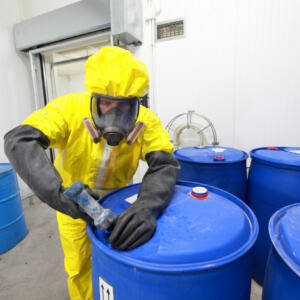
- Money back guarantee
The HAZWOPER 40 Hour training program reviews the OSHA Hazardous Waste Operations and Emergency Response Standard for OSHA CFR 1910.120(e)(3)(i).
This program is designed for employees involved in clean-up operations; emergency response operations; corrective actions covered by the Resource Conservation and Recovery Act (RCRA); and treatment, storage, and disposal facility (TSD) operations.
Time Requirement
OSHA Standard 1910.120 requires trainees to complete 40-hours of off-site training as part of this program. After successfully completing each course exam, trainees are guaranteed to have met the 40-hour time requirement defined by OSHA.
OSHA On-site Requirement
After completing the OSHA HAZWOPER 40 Hour off-site training program, OSHA requires employees to receive three (3) days of on-the-job worksite-specific training provided by their company (29 CFR 1910.120 (e)(3)(i)).
HAZWOPER 40 Hour General Course Outline
| Module | Lessons & Course Content |
|---|---|
| 1. Overview of HAZWOPER |
• Scope, application, and history of the OSHA 29 CFR 1910.120 standard • Key definitions, regulatory mandates, and enforcement guidelines • The multi-tier training requirements for hazardous waste operations |
| 2. HAZWOPER for Cleanup Operations |
• Regulations governing uncontrolled hazardous waste sites and remedial actions • Safety protocols, site-specific work plans, and programmatic structures • Requirements for standard 40-hour and 24-hour training tracks |
| 3. HAZWOPER For TSD Facilities |
• Compliance rules for Treatment, Storage, and Disposal (TSD) installations • Hazard communication, contingency plans, and emergency standard operating procedures • Regulatory training provisions for onsite employees under paragraph (p) |
| 4. HAZWOPER For Emergency Responders |
• Emergency response plans (ERP) and standard operation guidelines for releases • Unified Incident Command System (ICS) implementation and roles • Distinctions between Awareness, Operations, Technician, and Specialist response levels |
| 5. Brownfields and Clandestine Drug Labs |
• Special environmental assessment protocols for redeveloping contaminated Brownfields sites • Identifying unique toxic and explosive chemical profiles found in illicit drug labs • Specialized PPE, safety measures, and decontamination routes for law enforcement and clean-up crews |
| 6. Handling Drums and Containers |
• Procedures for safe inspection, moving, handling, and opening of chemical vessels • Minimizing shock, detonation, and reaction hazards from pressurized or bulging drums • Management practices for radioactive, laboratory waste packs, and unknown bulk containers |
| 7. HAZWOPER Safety and Health Program |
• Components of a comprehensive written safety and health program • Continuous standard operating procedures (SOPs) development and auditing • Organizational structures and line authority assignments for site safety managers |
| 8. Planning and Organization |
• Creating complex site-specific safety plans prior to mobilization • Coordinating logistic operations, field chains of command, and communications • Integrating local emergency services and external response assets into site layouts |
| 9. Training |
• Mandatory hourly minimums, field exercises, and annual refresher parameters • Criteria for matching dynamic worker duties to specific instructional curricula • Certification documentation, documentation retention policies, and compliance reporting |
| 10. Introduction to Hazard Identification and Control |
• Recognizing physical, chemical, biological, and radiological workplace threats • Core principles of hazard valuation, vulnerability matrixes, and risk estimation • Applying the Hierarchy of Controls to minimize site toxic hazards |
| 11. Introduction to Hazardous Substances |
• Regulatory lists of hazardous substances and identification catalogs • Broad classifications including acids, bases, heavy metals, and organic synthetics • Common industry uses, environmental fates, and general warning characteristics |
| 12. Physical Properties of Hazardous Substances |
• Flash points, vapor pressure, boiling points, and chemical compatibility metrics • Vapor density, water solubility, and specific gravity consequences on containment • Utilizing physicochemical coefficients to forecast fire, explosion, or gas release behavior |
| 13. Toxicology |
• Mechanistic frameworks of toxicants entering and altering human physiology • Dose-response relationship arcs, LD50/LC50 indexes, and threshold curves • Distinctions between acute systemic toxification, chronic conditions, and target organ effects |
| 14. Health Hazards |
• Manifestations of chemical carcinogenesis, mutagenicity, teratogenicity, and organ toxicity • Immediate danger signs of systemic poisoning, asphyxiation, neurotoxicity, and dermatological burns • Recognizing early indicators of chemical overexposure and sensory indicators in workers |
| 15. General Responsibilities |
• Legal parameters defining corporate liability and worker protections • Mandated roles for employers to supply safety gear, training, and engineering equipment • Employees’ statutory obligations to adhere to standard operating procedures and stop unsafe tasks |
| 16. Analyzing the Workplace |
• Ongoing workplace walkthrough surveys, workflow examinations, and safety audits • Identifying localized atmospheric trends, mechanical entrapments, and ergonomic strains • document review of logbooks, historical manifests, and medical tracking records |
| 17. Chemical Hazards in Construction |
• Controlling crystalline silica dust, heavy metals, asbestos fibers, and chemical solvents • Evaluating exposure risks during cutting, abrasive blasting, coatings application, and demolitions • Integrating environmental barriers, engineering vacuums, and wet processing protocols |
| 18. Container Labeling |
• Decoding the complex labeling arrays of OSHA GHS, NFPA 704, and DOT systems • Mandatory display criteria of hazard pictograms, signal words, and danger codes • Requirements for cross-labeling intermediate secondary containers inside workspace areas |
| 19. Safety Data Sheets (SDS) |
• Comprehending the unified 16-section standard layout for modern safety data documents • Rapid extraction of acute exposure response, first aid, and physical property lists • Retaining, organizing, and ensuring immediate multi-format SDS accessibility for workers |
| 20. Information and Training |
• Methods for continuous updates on site layout shifts, active hazards, and protective plans • Structure of daily briefings, hazard warnings, toolbox discussions, and field drills • Mechanisms for worker legal access to occupational monitoring results and medical history |
| 21. Site Characterization – Off-site |
• Gathering preliminary records, aerial photography, transport manifests, and historical data • Initial visual assessment of perimeters using remote cameras, drones, and telemetry • Planning safe pathways, fallback emergency zones, and command trailer coordinates before field deployment |
| 22. Site Characterization – On-site Survey |
• Systematic deployment of entry teams to document active topography and hazards • Gathering ambient air profiles, identifying structural anomalies, and marking chemical storage zones • Continuous assessment of terrain shifts, pooling fluids, and structural integrity stability |
| 23. Hazard Identification, Analysis, and Monitoring |
• Formulating a data-driven testing matrix to measure worker chemical profiles • Deploying direct-reading instruments, colorimetric indicators, and quantitative field analytics • Documenting ambient contamination baselines to assess needed protection tiers |
| 24. Air Monitoring |
• Operating photoionization detectors (PIDs), flame ionization systems, and multi-gas meters • Continuous tracking of oxygen depletion levels, lower explosive limits (LEL), and volatile compounds • Calibrating field instruments to maintain validation records against background interference |
| 25. General Monitoring Practices |
• Executing personal inhalation pump sampling, dosimeter tracking, and area assessments • Safe data storage, chain-of-custody laboratory sample management, and analytical modeling • Translating complex sensor metrics into operational safety boundaries and exposure zones |
| 26. Personal Protective Equipment (PPE) Basics |
• Detailed comparison of OSHA Level A, B, C, and D protective equipment standards • Defining protection profiles, equipment constraints, and target use profiles for each level • Administrative requirements for written gear selection programs, sizing, and validation metrics |
| 27. Selection of Protective Clothing and Accessories |
• Evaluating head, foot, eye, and extremities gear alongside chemical suit sets • Integrating supplementary protective layers for puncture, impact, and slip prevention • Sizing adjustments, thermal adaptations, and ergonomics integration for physical activities |
| 28. Selecting Chemical-Protective Clothing (CPC) |
• Chemical permeation charts, breakthrough time calculations, degradation, and penetration limits • Matching specific fabric profiles (Viton, Tychem, Butyl) against active workspace chemical agents • Cost-to-benefit analytics of disposable garments versus complex multi-use protective suits |
| 29. Ensemble Selection, Use, and Inspection |
• Multi-point pre-use inspection protocols for suits, gaskets, valves, and seams • Donning and doffing verification checks using assistant teams to prevent seal tears • Operational time calculations based on internal air tank limits and communication boundaries |
| 30. CPC Inspection and Storage |
• Post-use damage testing, pressure tests for Level A suits, and seam checks • Climate control storage standards to prevent polymer degradation and ozone breakdown • Shelf-life tracking, log documentation, and mandatory disposal criteria for contaminated gear |
| 31. Heat and Cold Stress |
• Pathophysiology of heat stroke, exhaustion, hypothermia, and frostbite in heavy chemical suits • Calculating target work/rest intervals using Wet Bulb Globe Temperature (WBGT) indicators • Implementation of fluid replenishment programs, physical monitoring, and cooling auxiliary gear |
| 32. Site Control |
• Designing and establishing the Exclusion Zone, Contamination Reduction Zone, and Support Zone • Demarcating clear access control points, hotlines, and physical containment perimeters • Enforcing traffic lane routes to minimize spread of chemical contaminants across site lines |
| 33. Site Security and Best Practices |
• Installing protective fences, warning signs, check-in stations, and perimeter lighting • Preventing unauthorized community trespass, vandalism, or wildlife intrusion into toxic operations • Implementing site visitor validation, tracking manifests, and security team emergency duties |
| 34. Decontamination |
• Engineering multi-stage decontamination lines for equipment and personnel clean down • Formulating chemical wash methods, neutralizing solutions, and water rinse sequences • Managing hazardous liquid wastewater capture, solid waste disposal, and emergency decontamination lines |
| 35. Confined Space Safety Basics |
• Distinguishing between Permit-Required and Non-Permit confined spaces via OSHA indicators • Identifying configuration hazards, entry path limits, and entrapment layouts • Reviewing written entry permit rules, authorization steps, and sign-off protocols |
| 36. Atmospheric Hazards |
• Testing for oxygen enrichment/depletion, toxic gas concentrations, and combustible vapors • Proper height stratifications for gas checking using remote line extensions • Mitigating toxic air build-up from legacy chemical residues or internal tasks |
| 37. Non-Atmospheric Hazards |
• Controlling engulfment threats from shifting solids, grain storage, or liquid inflows • Managing mechanical kinetic energy, electrical grids, and thermal surfaces inside spaces • Mitigating extreme acoustic echoes, visibility limits, and physical slips/trips hazards |
| 38. Controlling Confined Space Hazards |
• Enforcing Lockout/Tagout (LOTO) energy isolation on lines entering the space • Calculating continuous mechanical purge-ventilation requirements and cross-drafts • Using explosion-proof electrical systems, non-sparking hand tools, and containment drops |
| 39. Confined Space Entry and Rescue |
• Mandatory coordination between Entrants, Attendants, and Entry Supervisors • Operating retrieval hoist lifelines, mechanical harnesses, and non-entry rescue arrays • Managing technical rescue team setups, medical extraction routes, and practice drill runs |
| 40. Confined Space Training Requirements |
• Mandatory instruction for all assigned entry support personnel and supervisors • Attendant vigilance protocols, communication paths, and emergency alert triggers • Retraining mandates following site workflow alterations, tool changes, or safety program lapses |
| 41. Scaffold Safety |
• Capacity limits for supported/suspended scaffolds, including 4x safety factors • Planking regulations, assembly inspections, proper decking, and mudsill stability configurations • Implementing guardrails, midrails, toeboards, and personal fall arrest setups for high work |
| 42. Slips, Trips, and Falls |
• Identifying walkway risks, cords, fluid pools, and elevation changes • Housekeeping standards, line management, and clean layout rules • Selecting appropriate high-traction footwear and installing non-slip walkway surfaces |
| 43. Ladders and Stairways |
• Sizing rules, weight categories, and defect checking for step/extension ladders • Angles rules (4:1 ratio), 3-foot extension over landings, and 3-point contact mechanics • Structural metrics for temporary construction stairways, guardrails, and platform steps |
| 44. Working with Electricity |
• Recognizing high-voltage paths, arc-flash boundaries, and grounding anomalies • Mandatory deployment of Ground Fault Circuit Interrupters (GFCIs) on construction power lines • Safe approach distances for heavy equipment working around overhead power lines |
| 45. Excavation and Trenching |
• Role of the Competent Person in analyzing soil classifications (Types A, B, C) • Selecting trench cave-in protections: Sloping, Benching, Shoring, and Shielding configurations • Managing access ladders, spoil pile offsets, and hazardous gas monitoring inside deep cuts |
| 46. Cranes and Rigging |
• Calculating lift weights, boom configurations, and load chart limits • Inspection metrics for wire rope, slings, shackles, and hoist hook connections • Enforcing swing-radius clearances, outrigger pad supports, and hand signal protocols |
| 47. Powered Industrial Trucks, Heavy Vehicles, and Traffic Control |
• Forklift stability center dynamics, load center management, and tip-over escape moves • Separation layout safety plans for earth-movers, dump trucks, and ground workers • Implementing MUTCD traffic control layouts, flagger safety gear, and warning sign arrays |
| 48. Bloodborne Pathogens |
• Transmission modes for Hepatitis B (HBV), Hepatitis C (HCV), and Human Immunodeficiency Virus (HIV) • Applying Universal Precautions to prevent contact with blood or bodily fluids • Engineering controls, biohazard disposal rules, and post-exposure medical paths |
| 49. Specific Emergency Responder and HAZMAT Training |
• Incident management tactics for defensive containment operations versus offensive chemical stopping • Inter-agency coordination frameworks during massive industrial releases • Post-incident monitoring, debriefing, and evaluation rules for emergency teams |
| 50. Worker Rights and Protections |
• Whistleblower protections under Section 11(c) of the OSH Act for reporting hazards • Worker rights to refuse unsafe tasks without fear of retaliation or job action • Access rights to corporate exposure logs, medical charts, and official OSHA inspection files |
3 reviews for OSHA HAZWOPER 40 Hour
Only logged in customers who have purchased this product may leave a review.
Michael Mathe –
Its a lot of content to get thru but well presented fast and pretty easy to use (i use a tablet)
Freddy Alvarez –
Overall great, one of the videos did’nt work but they fixed it fast when I told them, very pleasant way to train on my ipad
Pedro Salvador –
Easy to use and do at my own pace, looks good like an app..