

OSHA HAZWOPER 24 Hour
$109.95
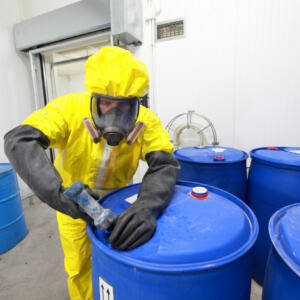
The online OSHA HAZWOPER 24 Hour certification course provides you with important information about OSHA’s standard for HAZWOPER in clean up operations.
Instant access course
- Begin training immediately after checkout
- Train on any device
- Money back guarantee
The HAZWOPER 24 Hour online training course provides basic training for employees who may be exposed to hazardous chemicals or doing clean-up of hazardous substances, but will not face these hazards on a daily basis. It is required if you or your employees’ exposure will meet or exceed OSHA Permissible Exposure Limits (PELs).
If your workplace is a designated HAZWOPER site under OSHA regulation 29 CFR 1910.120, you will need to take the 24-hour HAZWOPER course. OSHA HAZWOPER training is required for everyone who works at contaminated sites.
Time Requirement
OSHA Standard 1910.120 requires trainees to complete 24-hours of off-site training as part of this program. After successfully completing each course exam, trainees are guaranteed to have met the 24-hour time requirement defined by OSHA.
OSHA On-site Requirement
After completing the OSHA HAZWOPER 24 Hour off-site training program, OSHA requires employees to receive one (1) days of on-the-job worksite-specific training provided by their company (29 CFR 1910.120 (e)(3)(i)).
HAZWOPER 24 Hour General Course Outline
| Module | Lessons & Course Content |
|---|---|
| 1. Overview of HAZWOPER |
• Scope, application, and history of the OSHA 29 CFR 1910.120 standard • Key definitions, regulatory mandates, and enforcement guidelines • The multi-tier training requirements for hazardous waste operations |
| 2. HAZWOPER For Emergency Responders |
• Emergency response plans (ERP) and standard operation guidelines for releases • Unified Incident Command System (ICS) implementation and roles • Distinctions between Awareness, Operations, Technician, and Specialist response levels |
| 3. Handling Drums and Containers |
• Procedures for safe inspection, moving, handling, and opening of chemical vessels • Minimizing shock, detonation, and reaction hazards from pressurized or bulging drums • Management practices for radioactive, laboratory waste packs, and unknown bulk containers |
| 4. HAZWOPER Safety and Health Program |
• Components of a comprehensive written safety and health program • Continuous standard operating procedures (SOPs) development and auditing • Organizational structures and line authority assignments for site safety managers |
| 5. Planning and Organization |
• Creating complex site-specific safety plans prior to mobilization • Coordinating logistic operations, field chains of command, and communications • Integrating local emergency services and external response assets into site layouts |
| 6. Training |
• Mandatory hourly minimums, field exercises, and annual refresher parameters • Criteria for matching dynamic worker duties to specific instructional curricula • Certification documentation, documentation retention policies, and compliance reporting |
| 7. Introduction to Hazard Identification and Control |
• Recognizing physical, chemical, biological, and radiological workplace threats • Core principles of hazard valuation, vulnerability matrixes, and risk estimation • Applying the Hierarchy of Controls to minimize site toxic hazards |
| 8. Introduction to Hazardous Substances |
• Regulatory lists of hazardous substances and identification catalogs • Broad classifications including acids, bases, heavy metals, and organic synthetics • Common industry uses, environmental fates, and general warning characteristics |
| 9. Physical Properties of Hazardous Substances |
• Flash points, vapor pressure, boiling points, and chemical compatibility metrics • Vapor density, water solubility, and specific gravity consequences on containment • Utilizing physicochemical coefficients to forecast fire, explosion, or gas release behavior |
| 10. Toxicology |
• Mechanistic frameworks of toxicants entering and altering human physiology • Dose-response relationship arcs, LD50/LC50 indexes, and threshold curves • Distinctions between acute systemic toxification, chronic conditions, and target organ effects |
| 11. Health Hazards |
• Manifestations of chemical carcinogenesis, mutagenicity, teratogenicity, and organ toxicity • Immediate danger signs of systemic poisoning, asphyxiation, neurotoxicity, and dermatological burns • Recognizing early indicators of chemical overexposure and sensory indicators in workers |
| 12. General Responsibilities |
• Legal parameters defining corporate liability and worker protections • Mandated roles for employers to supply safety gear, training, and engineering equipment • Employees’ statutory obligations to adhere to standard operating procedures and stop unsafe tasks |
| 13. Analyzing the Workplace |
• Ongoing workplace walkthrough surveys, workflow examinations, and safety audits • Identifying localized atmospheric trends, mechanical entrapments, and ergonomic strains • Document review of logbooks, historical manifests, and medical tracking records |
| 14. Chemical Hazards in Construction |
• Controlling crystalline silica dust, heavy metals, asbestos fibers, and chemical solvents • Evaluating exposure risks during cutting, abrasive blasting, coatings application, and demolitions • Integrating environmental barriers, engineering vacuums, and wet processing protocols |
| 15. Container Labeling |
• Decoding the complex labeling arrays of OSHA GHS, NFPA 704, and DOT systems • Mandatory display criteria of hazard pictograms, signal words, and danger codes • Requirements for cross-labeling intermediate secondary containers inside workspace areas |
| 16. Safety Data Sheets (SDS) |
• Comprehending the unified 16-section standard layout for modern safety data documents • Rapid extraction of acute exposure response, first aid, and physical property lists • Retaining, organizing, and ensuring immediate multi-format SDS accessibility for workers |
| 17. Information and Training |
• Methods for continuous updates on site layout shifts, active hazards, and protective plans • Structure of daily briefings, hazard warnings, toolbox discussions, and field drills • Mechanisms for worker legal access to occupational monitoring results and medical history |
| 18. Site Characterization – On-site Survey |
• Systematic deployment of entry teams to document active topography and hazards • Gathering ambient air profiles, identifying structural anomalies, and marking chemical storage zones • Continuous assessment of terrain shifts, pooling fluids, and structural integrity stability |
| 19. Hazard Identification, Analysis, and Monitoring |
• Formulating a data-driven testing matrix to measure worker chemical profiles • Deploying direct-reading instruments, colorimetric indicators, and quantitative field analytics • Documenting ambient contamination baselines to assess needed protection tiers |
| 20. Air Monitoring |
• Operating photoionization detectors (PIDs), flame ionization systems, and multi-gas meters • Continuous tracking of oxygen depletion levels, lower explosive limits (LEL), and volatile compounds • Calibrating field instruments to maintain validation records against background interference |
| 21. General Monitoring Practices |
• Executing personal inhalation pump sampling, dosimeter tracking, and area assessments • Safe data storage, chain-of-custody laboratory sample management, and analytical modeling • Translating complex sensor metrics into operational safety boundaries and exposure zones |
| 22. Personal Protective Equipment (PPE) Basics |
• Detailed comparison of OSHA Level A, B, C, and D protective equipment standards • Defining protection profiles, equipment constraints, and target use profiles for each level • Administrative requirements for written gear selection programs, sizing, and validation metrics |
| 23. Selection of Protective Clothing and Accessories |
• Evaluating head, foot, eye, and extremities gear alongside chemical suit sets • Integrating supplementary protective layers for puncture, impact, and slip prevention • Sizing adjustments, thermal adaptations, and ergonomics integration for physical activities |
| 24. Selecting Chemical-Protective Clothing (CPC) |
• Chemical permeation charts, breakthrough time calculations, degradation, and penetration limits • Matching specific fabric profiles (Viton, Tychem, Butyl) against active workspace chemical agents • Cost-to-benefit analytics of disposable garments versus complex multi-use protective suits |
| 25. Ensemble Selection, Use, and Inspection |
• Multi-point pre-use inspection protocols for suits, gaskets, valves, and seams • Donning and doffing verification checks using assistant teams to prevent seal tears • Operational time calculations based on internal air tank limits and communication boundaries |
| 26. CPC Inspection and Storage |
• Post-use damage testing, pressure tests for Level A suits, and seam checks • Climate control storage standards to prevent polymer degradation and ozone breakdown • Shelf-life tracking, log documentation, and mandatory disposal criteria for contaminated gear |
| 27. Heat and Cold Stress |
• Pathophysiology of heat stroke, exhaustion, hypothermia, and frostbite in heavy chemical suits • Calculating target work/rest intervals using Wet Bulb Globe Temperature (WBGT) indicators • Implementation of fluid replenishment programs, physical monitoring, and cooling auxiliary gear |
| 28. Site Control |
• Designing and establishing the Exclusion Zone, Contamination Reduction Zone, and Support Zone • Demarcating clear access control points, hotlines, and physical containment perimeters • Enforcing traffic lane routes to minimize spread of chemical contaminants across site lines |
| 29. Site Security and Best Practices |
• Installing protective fences, warning signs, check-in stations, and perimeter lighting • Preventing unauthorized community trespass, vandalism, or wildlife intrusion into toxic operations • Implementing site visitor validation, tracking manifests, and security team emergency duties |
| 30. Decontamination |
• Engineering multi-stage decontamination lines for equipment and personnel clean down • Formulating chemical wash methods, neutralizing solutions, and water rinse sequences • Managing hazardous liquid wastewater capture, solid waste disposal, and emergency decontamination lines |
| 31. Confined Space Safety Basics |
• Distinguishing between Permit-Required and Non-Permit confined spaces via OSHA indicators • Identifying configuration hazards, entry path limits, and entrapment layouts • Reviewing written entry permit rules, authorization steps, and sign-off protocols |
| 32. Atmospheric Hazards |
• Testing for oxygen enrichment/depletion, toxic gas concentrations, and combustible vapors • Proper height stratifications for gas checking using remote line extensions • Mitigating toxic air build-up from legacy chemical residues or internal tasks |
| 33. Non-Atmospheric Hazards |
• Controlling engulfment threats from shifting solids, grain storage, or liquid inflows • Managing mechanical kinetic energy, electrical grids, and thermal surfaces inside spaces • Mitigating extreme acoustic echoes, visibility limits, and physical slips/trips hazards |
| 34. Controlling Confined Space Hazards |
• Enforcing Lockout/Tagout (LOTO) energy isolation on lines entering the space • Calculating continuous mechanical purge-ventilation requirements and cross-drafts • Using explosion-proof electrical systems, non-sparking hand tools, and containment drops |
| 35. Confined Space Entry and Rescue |
• Mandatory coordination between Entrants, Attendants, and Entry Supervisors • Operating retrieval hoist lifelines, mechanical harnesses, and non-entry rescue arrays • Managing technical rescue team setups, medical extraction routes, and practice drill runs |
| 36. Confined Space Training Requirements |
• Mandatory instruction for all assigned entry support personnel and supervisors • Attendant vigilance protocols, communication paths, and emergency alert triggers • Retraining mandates following site workflow alterations, tool changes, or safety program lapses |
| 37. Working with Electricity |
• Recognizing high-voltage paths, arc-flash boundaries, and grounding anomalies • Mandatory deployment of Ground Fault Circuit Interrupters (GFCIs) on construction power lines • Safe approach distances for heavy equipment working around overhead power lines |
| 38. Excavation and Trenching |
• Role of the Competent Person in analyzing soil classifications (Types A, B, C) • Selecting trench cave-in protections: Sloping, Benching, Shoring, and Shielding configurations • Managing access ladders, spoil pile offsets, and hazardous gas monitoring inside deep cuts |
| 39. Bloodborne Pathogens |
• Transmission modes for Hepatitis B (HBV), Hepatitis C (HCV), and Human Immunodeficiency Virus (HIV) • Applying Universal Precautions to prevent contact with blood or bodily fluids • Engineering controls, biohazard disposal rules, and post-exposure medical paths |
| 40. Handling Drums and Containers |
• Procedures for safe inspection, moving, handling, and opening of chemical vessels • Minimizing shock, detonation, and reaction hazards from pressurized or bulging drums • Management practices for radioactive, laboratory waste packs, and unknown bulk containers |
| 41. Worker Rights and Protections |
• Whistleblower protections under Section 11(c) of the OSH Act for reporting hazards • Worker rights to refuse unsafe tasks without fear of retaliation or job action • Access rights to corporate exposure logs, medical charts, and official OSHA inspection files |
1 review for OSHA HAZWOPER 24 Hour
Only logged in customers who have purchased this product may leave a review.
Danny Harper –
Fast and simple to use, much better than others I have tried previously